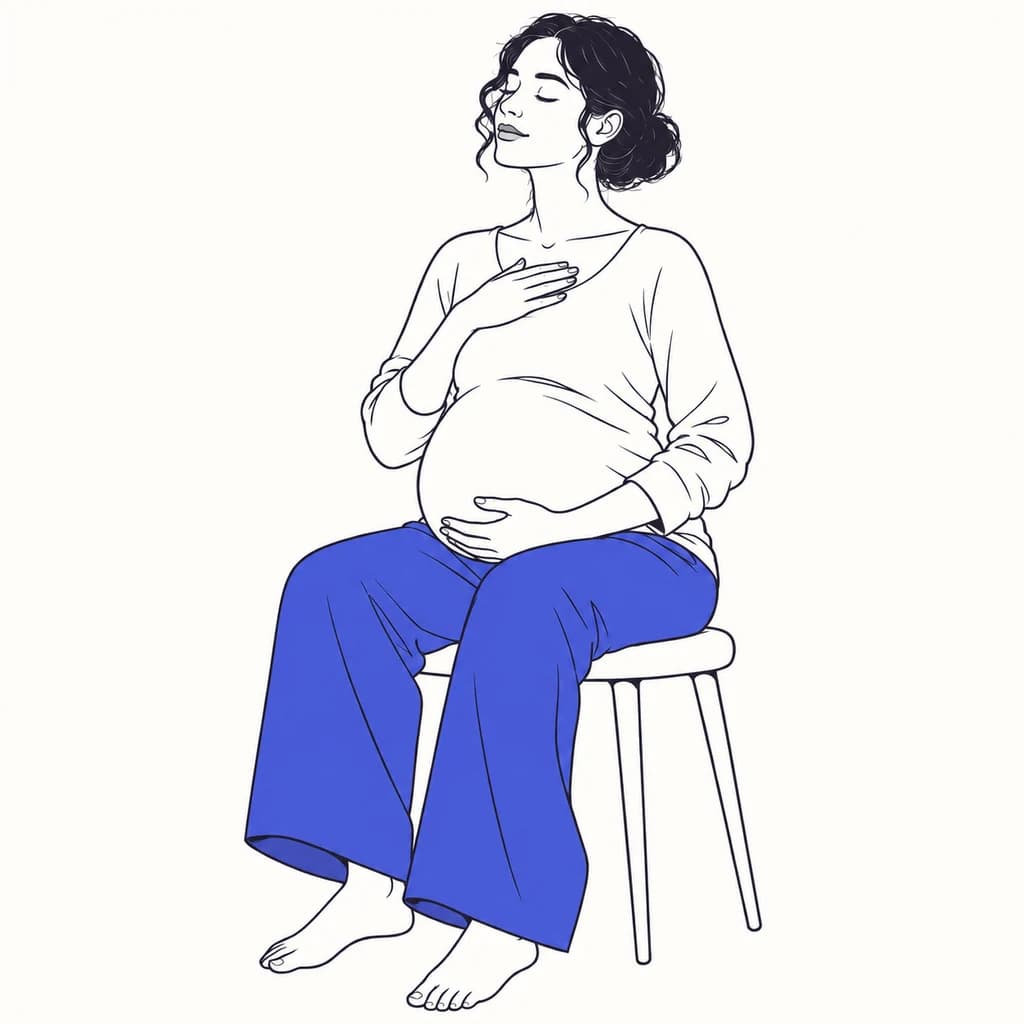
“Just breathe” can sound reassuring or deeply unhelpful, depending on when it is said. Breathing becomes more useful as preparation when it is offered as a choice, with room for your comfort, feelings and clinical care.
This article looks at the role of a breathing focus. For ways to explore counting and imagery, use our practical breathing guide.
A small task for your attention
When there is a lot to think about, noticing an ordinary breath can give your attention something immediate to do. You might prefer to feel the breath, listen to a voice or picture a wave. You might discover that a different focus — a hand to hold or an object in the room — works better for you.
There is no requirement to breathe deeply or slowly enough to prove that you are relaxed. Trying hard to achieve a particular pattern can turn a comfort practice into another demand. Begin with what feels easy and let that guide your choice.
What the guidance supports
NICE recommends supporting people who choose breathing and relaxation techniques during labour. It also describes breathing exercises as one measure that may help with pain in the early, latent stage. That is a more measured claim than promising painless birth or a particular hormonal response. NICE intrapartum care guidance.
Labour can be painful even when you are well prepared and feel supported. If you want pain relief, more information or a change of approach, ask. Choosing another option does not cancel out your preparation.
Familiarity can be the useful part
Trying a practice beforehand lets you discover whether you like the language and pace. You can tell a partner, “Remind me of this image,” or “Counting makes me feel rushed.” That is valuable preparation even if you never use the technique exactly as rehearsed.
Choose a comfortable moment rather than deliberately creating discomfort. A few ordinary breaths are enough to explore. You do not need to build a streak or expect a particular result after a certain number of days.
In labour, keep choice available
You may want a cue during one contraction and quiet during the next. You may change position, make sound or stop listening. None of those is a mistake. A partner can ask what helps instead of coaching continuously.
Keep communication with your care team available. A recording cannot tell you what a symptom means, how labour is progressing or when to push. Pushing advice depends on your circumstances, including pain relief, and belongs with the team caring for you.
If focusing on breath does not feel good
Not everyone finds breathing attention calming. If you feel uncomfortable, dizzy, breathless or more anxious, stop the exercise and return to ordinary breathing. Seek appropriate care for symptoms or concerns. You can choose a different way to pause; there is no technique you must make work.
One useful question after practice is, “Would I want someone to remind me of that?” Keep what fits and leave the rest. The aim is a choice you can draw on, not a rule you must obey.
Where to go next
Explore Breathing Through Birth or begin with the full free Calm Labour Foundation. For clinical comfort options, read the NHS guide to pain relief and discuss it with your midwife.