Meeting the breath you have
Welcome to Breathing Through Birth. Breath is always present, but it does not have to become another task to master. This practice is a chance to discover which cues, if any, feel useful to you.
Sit upright, lie on your side or choose another supported position. Before changing anything, notice how you are breathing. It may feel shallow, full, quick, uneven or quiet. There is no judgement and no ideal starting point.
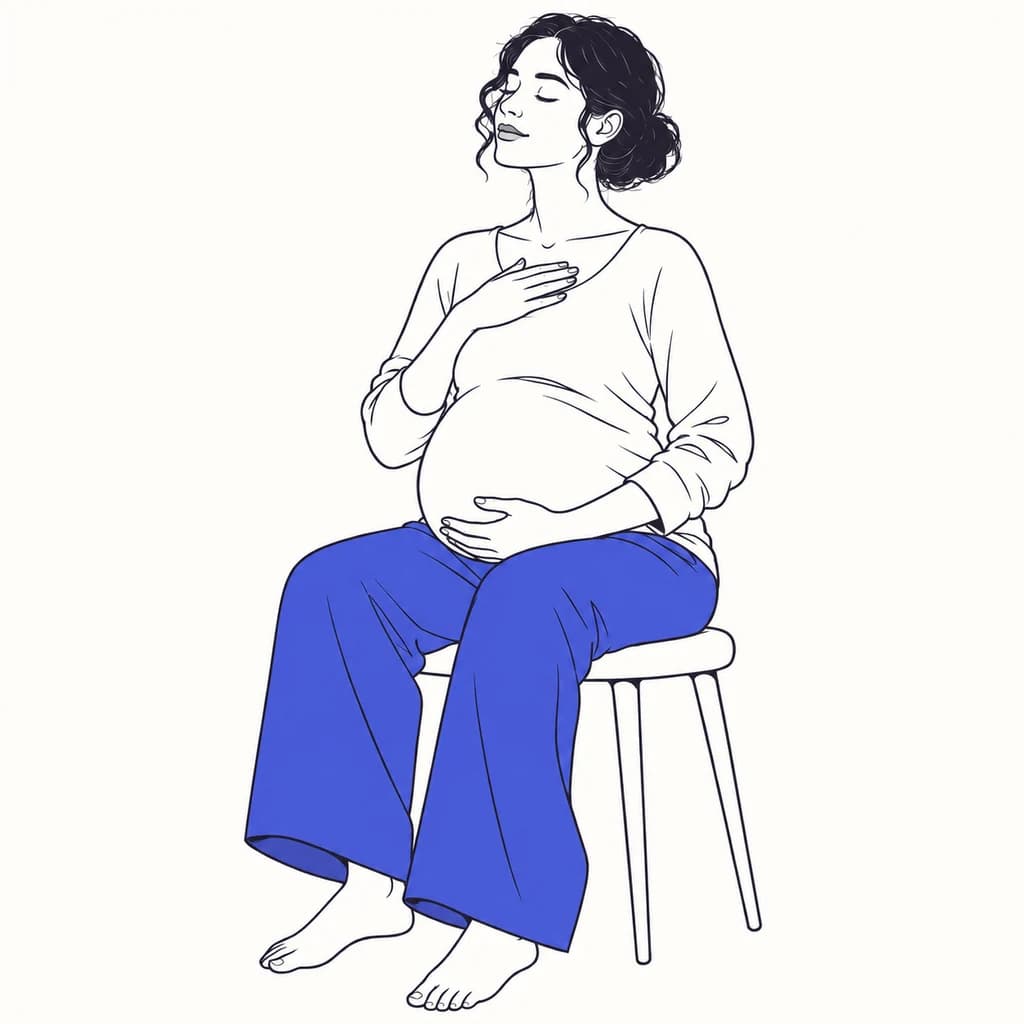
If you like, place one hand on your chest and one on your belly. Notice where movement happens. You may invite the lower hand to rise a little on an inhale, but your belly does not have to move in a particular way. Let both hands be observers rather than instructors.
Golden air
Imagine the air around you as a soft golden mist. On a comfortable inhale, picture some of that colour arriving through your nose and spreading through your chest. On the exhale, see it settling through the body.
The gold is simply an image for attention. You do not need to trace oxygen through the body or imagine that a particular breath controls pain, uterine work or your baby’s wellbeing.
Try a few ordinary breaths with the colour. Notice the coolness of air arriving and the warmer feeling of it leaving. Stop the image whenever it becomes distracting.
An optional longer exhale
If it feels easy, try letting the out-breath last a little longer than the in-breath. You might count gently in for three and out for four, or choose no numbers at all. The aim is comfort, not reaching a ratio.
Picture blowing a feather just enough to keep it moving, or making a candle flame flicker without trying to reach it. Keep the lips and jaw easy. End the exhale before you have to strain for the next breath.
Move the image around the body: breathe out as though making space around the jaw, then the shoulders, hands or lower back. These are attention cues, not claims that breath can open the pelvis or cervix.
One imagined wave
Picture a labour sensation beginning. Before it grows, choose your breath rather than holding it deliberately. It might be counted, audible, natural or something you find in the moment.
As the wave rises, keep returning to one exhale at a time. Let your shoulders move and your face respond honestly. Pain or panic can still occur while you are breathing slowly; if they do, you deserve more support rather than blame.
The wave reaches a peak and fades in the image. Return to everyday breathing. In real labour you may also move, vocalise, use water, accept medication or ask your team to assess what you are feeling.
Colour, roots and return
Choose a colour that feels calming. Imagine breathing it in and letting a different colour leave with any tension that is ready to go. There is no need for every worry to disappear.
Finally, picture yourself as a tree. On the inhale, awareness travels from roots towards the branches. On the exhale, it moves out through the leaves. You are connected to the ground while the breath passes through.
Keep any words that fit: My breath can be an anchor. I can change the rhythm. I can ask for help. Slow breath, fast breath or no counting—I can choose what serves me. Notice the room, move your shoulders and open your eyes when ready.