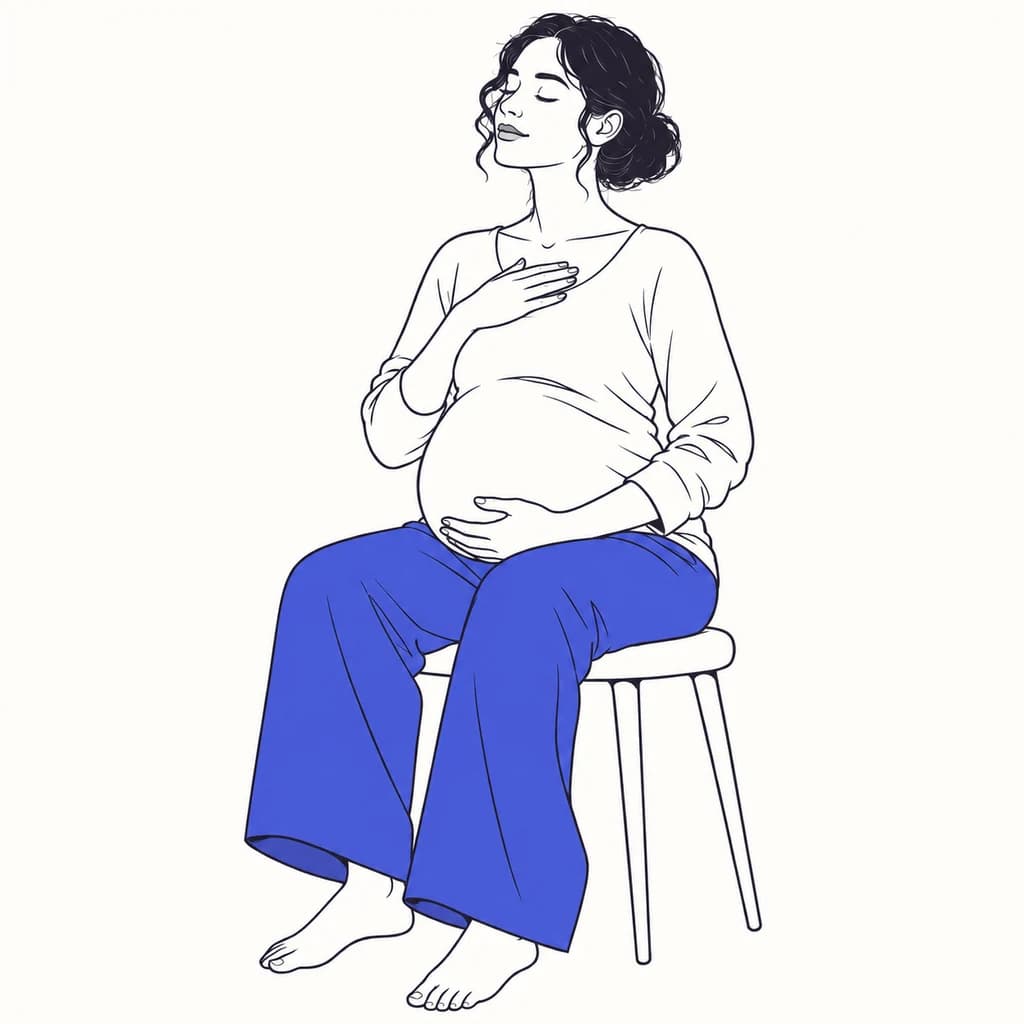
Giving weight to support
Welcome to Slow Exhale Softening. The exhale can be a moment to notice what you are holding and decide whether any of it is ready to loosen.
Choose a fully supported position. Imagine a garment taken from a hanger and draped across a chair: shape still present, but no need to hold itself upright. Give some of your weight to the surface beneath you.
Notice an inhale arriving. Let the exhale leave without squeezing the last air out. That comfortable ending is more important than length.
Jaw, shoulders and pelvis
Imagine warm honey across your forehead and cheeks. As you breathe out, let it reach the hinge of the jaw. Make space between the teeth and rest the tongue if that feels good.
Follow the warmth to the shoulders. Picture a heavy velvet coat sliding down your arms and onto the floor. Let the shoulder blades find the support behind you.
Bring gentle attention to the base of the pelvis without pushing, bulging or trying to open it. If flower imagery feels comfortable, picture petals resting in warm light. Jaw and pelvic tension can both change, but one does not provide a reliable switch for the other.
The softening cascade
On one easy exhale, travel in your mind from jaw to shoulders to pelvis. At each point, ask rather than command: would anything like to soften?
Try the cascade again. Face, shoulders, base of the body. Let out a sigh or make a low sound if you want to. Keep your natural posture and move whenever you need to.
Picture a square of butter warming on toast. Its edges become round and it spreads. You can borrow that image for tension while remembering that your body does not need to become completely liquid or still.
Softness beside a wave
Imagine a labour wave gathering. On an exhale, check the jaw. On another, notice the shoulders. Bring awareness towards the pelvis only in a way that remains comfortable and never push on the instruction of this reading.
The sensation may still hurt. Softening cannot guarantee that a wave passes without pain or that labour progresses. Use the image alongside whatever physical, medical and emotional support you choose.
A partner may offer the word ‘melt’ or a hand on your shoulder, but agree on that cue first. In the moment, you can ask them to continue, change pressure or stop immediately.
The downward elevator
Imagine an elevator descending from ten towards one. Each floor invites attention to another place: face, neck, shoulders, chest, belly, hips, legs and feet. Nothing has to double or deepen.
At the ground floor, choose words that fit: My exhale can be a release. I can soften and remain strong. I can move. I can say no to a cue. I can ask for more support.
Return by noticing your bones and the structure beneath you. Take an ordinary breath, move your jaw and roll your shoulders gently. Open your eyes when ready.