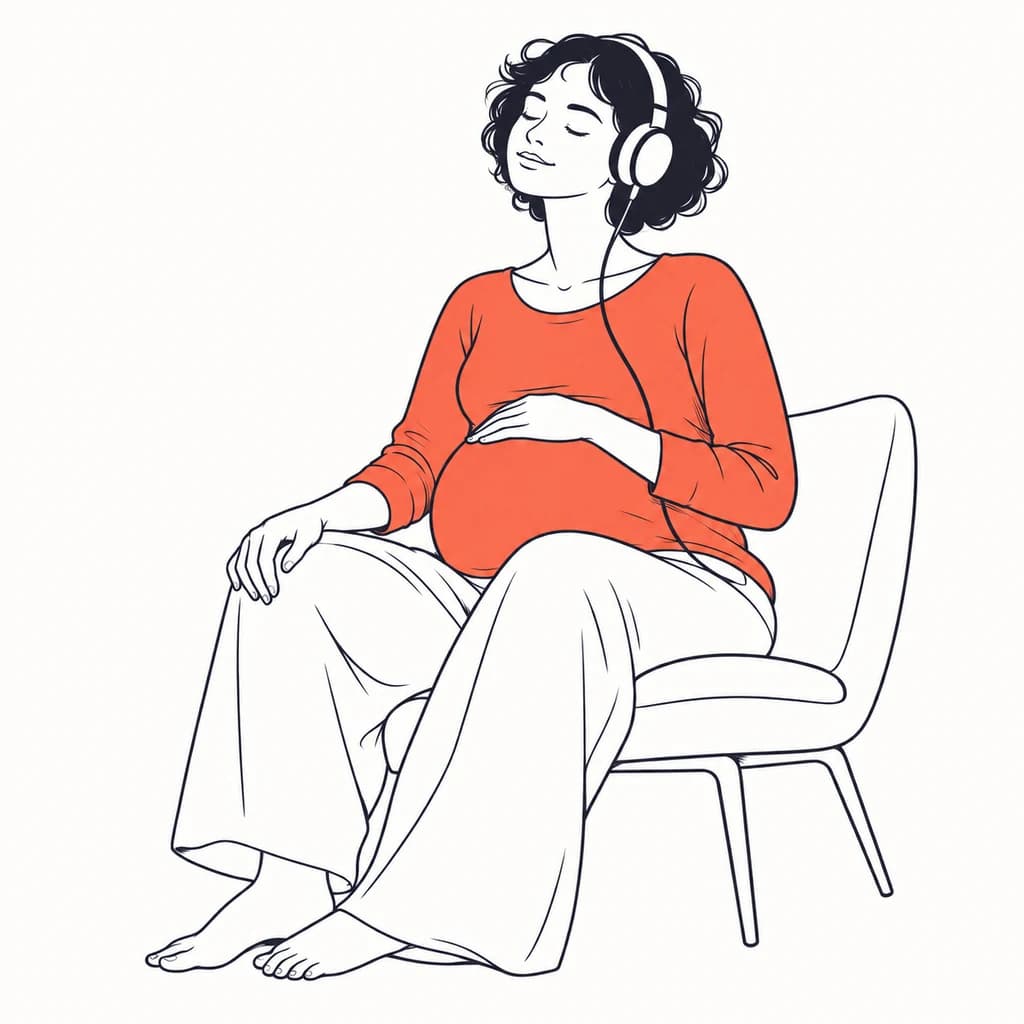
Finding the ground
Welcome to Grounded Between Surges. This practice pays attention to the spaces between contractions without asking those spaces to feel peaceful or long.
Lie down, sit or choose another supported position. Notice the weight of your head, ribs and pelvis. Let the pillow, chair or floor carry what it can. Imagine roots travelling from your back, hips and heels into the earth below.
Picture yourself as a mountain. Weather can cross the landscape while the ground remains beneath it. You do not have to be unmoving; the image is simply a reminder that support is available under your body.
A personal reset
Choose a reset cue for the end of an imagined wave. It might be opening your hands, lowering your shoulders, changing position or saying the word ‘rest.’ Practise by gently making a fist, then releasing it without force.
Notice the difference between effort and release. You may settle quickly, gradually or not at all. A reset is not a requirement to switch off, and a short pause is not equivalent to sleep. It is simply a chance to notice what would help next.
Your practical reset might include a sip of water, a cool cloth, the toilet, a new position, medication or a conversation with your team. Care needs do not interrupt the practice; they are part of looking after yourself.
The valley after the hill
Imagine a rolling landscape. A contraction is a hill on the path. When you come down the other side, a green valley opens around you, with shade, soft grass and a clear stream.
Instead of looking towards the next hill, let your attention rest in this valley. Feel the ground. Take a drink. Watch a cloud. You do not need to forget the previous experience or prepare perfectly for the next one.
Now picture a small wooden raft on a still lake. Step aboard and let it drift for as long as the imagined pause lasts. If voices or clinical checks need your attention, come back to the room. You can return to the lake later.
Support without disappearing
A support person can help protect a quieter pause by lowering their voice, offering water or reducing unnecessary interruption. They should continue to listen to you and to the clinical team rather than taking over decisions or monitoring.
If touch is welcome, they might place a steady hand on your shoulders or upper arms. Agree on the cue beforehand and check again in the moment. You can want firm pressure after one wave and space after the next.
Keep words that fit: I can leave one moment behind. I can rest without performing rest. Silence can help, and speaking up can help. I can meet the next need when it arrives.
The old tree
Picture an old tree in a forest. Its branches move when the wind arrives and become quieter when the air settles. It does not judge either state.
Let the image remind you that movement and stillness can both belong. When you are ready, notice the real surface beneath you, take an easy breath and bring movement back to your hands and feet. Open your eyes in your own time.