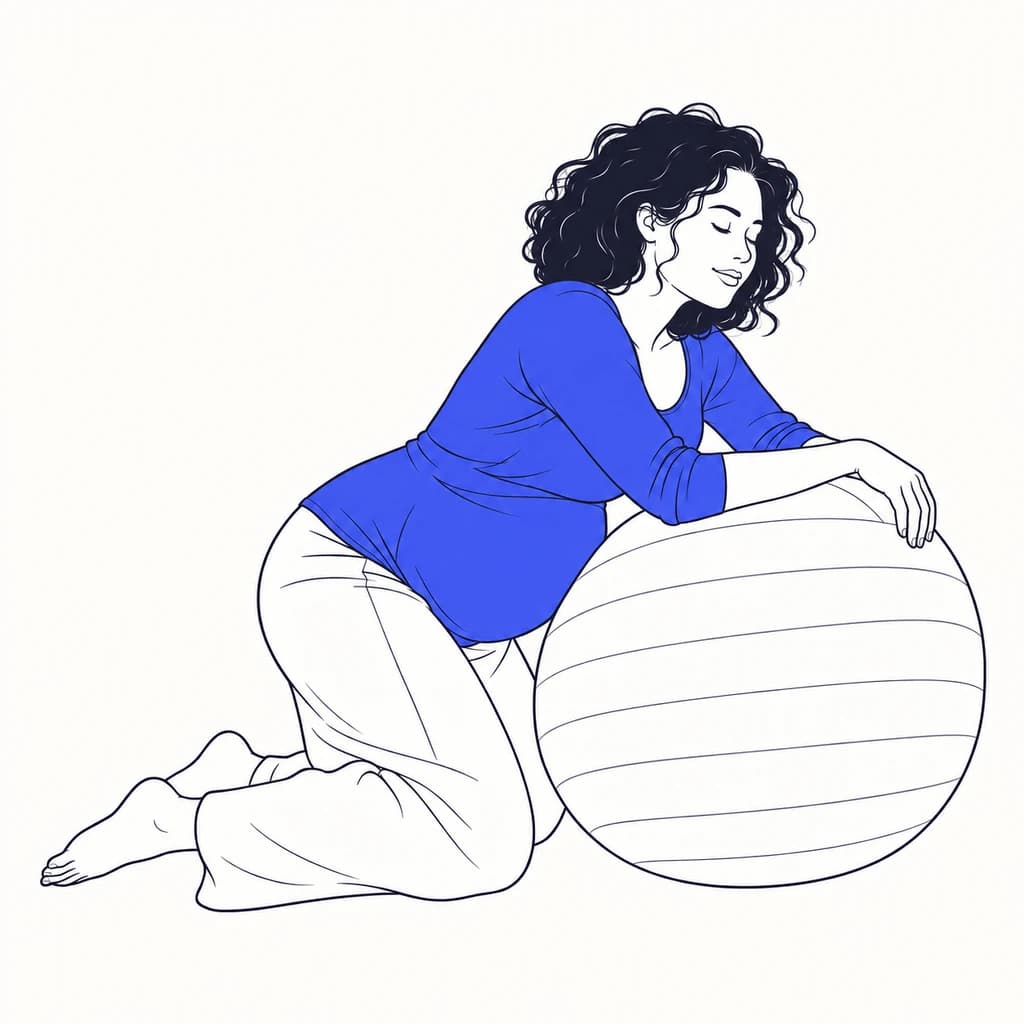
A beach beneath the moon
Welcome to Opening With Each Tide. This is a practice in cycles: the sea moving forward and returning, effort followed by release.
Make a comfortable nest and picture a vast beach at night. A full moon lays a silver path across the water. You rest on a dune, safely back from the edge, while warm sand shapes itself beneath you.
Listen to the waves arrive and leave. If it feels natural, notice one breath beside that rhythm. You do not need to synchronise with the ocean or lengthen the exhale.
Sand that can shift
Imagine the jaw and shoulders as warm, loose sand. Water reaches them and the grains rearrange. Nothing needs to disappear; the shape simply has permission to change.
Bring the sand image towards your pelvis only if that feels comfortable. Picture a circle drawn on the beach, its edges softened by the tide. This is an imaginative symbol of spaciousness, not a picture of your cervix or a claim about labour progress.
Let the inhale be ordinary. On the exhale, picture water travelling back towards the sea with any effort you no longer need to hold. A breath can be a focus; it does not fuel the uterus, guarantee comfort or determine what your baby needs.
Three tides
The first tide crosses the beach and reaches a new mark in the sand. Watch it return, leaving the shore glistening. Rest with the pause.
The second tide travels a little farther in your imagination. As it moves, choose one word—renew, release, steady or another that feels like yours. Let the word accompany the water without requiring any physical change.
A stronger third tide arrives. You can picture the sand yielding while acknowledging that real labour may be painful, complex and unlike this calm scene. When the water recedes, ask what you would want next: quiet, movement, touch, information or medication.
The mother-of-pearl cave
Slip beneath the imagined surface and find a cave lined with mother-of-pearl. The water here is still and warm, lit by a gentle iridescent glow.
A sea lotus rests inside. With each easy exhale, picture a petal unfolding. Let it be art rather than anatomy—an image you can enjoy without using it to judge your body or predict an outcome.
Keep any phrases that feel grounded: I can follow one cycle at a time. I can rest when the tide goes out. My choices can change. I can ask what is happening. I can be patient without waiting silently for help.
Carrying the tide into the room
Imagine the moonlit beach briefly around a future birthing space. A support person sits nearby as steady company, following your preferences for words, touch and quiet. Clinical care remains present within the scene.
Let the beach fade. Feel your real body on the bed or chair, take a comfortable breath and move your fingers and toes. Open your eyes when ready, carrying the tide only as an optional rhythm.