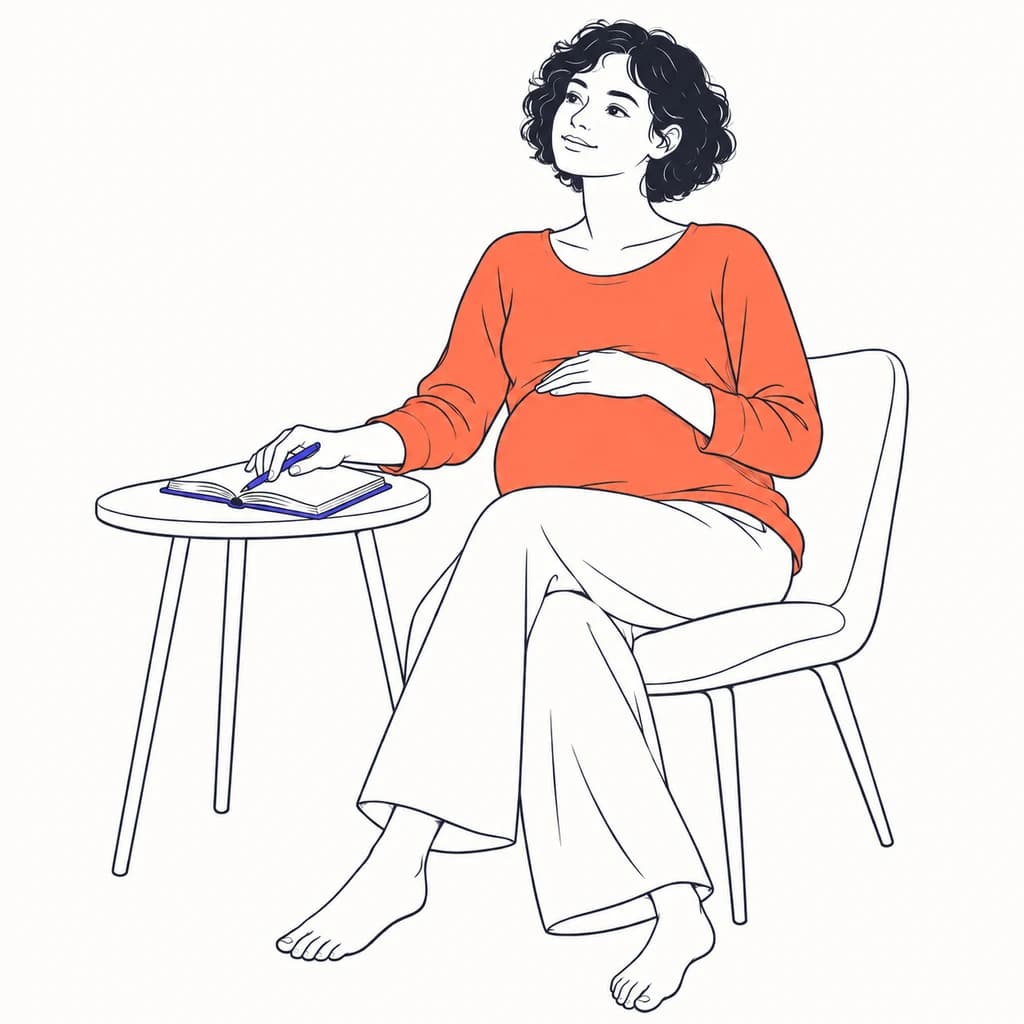
Thinking and feeling together
Welcome to Trusting Birth Instincts. Birth can involve thinking, feeling, clinical information and spontaneous response. You do not have to switch one part of yourself off to use another.
Settle somewhere you can move safely. Imagine a dimmer at the front of your mind. Turn down the noise of calculation and self-consciousness, while leaving the light needed for questions, consent and decisions.
Picture a warm glow at the base of the skull. Let it represent felt experience: pressure, temperature, position, emotion and the urge to change something.
The language of an urge
Scan the body and ask whether anything wants to move. The neck may want to roll, the jaw to open or the hips to shift. Respond only if the movement feels welcome and appropriate.
Notice the difference between an urge and an obligation. You can move, wait, ask for help or choose not to follow it. Equipment, monitoring, pain relief or clinical circumstances may shape what is possible.
Practising this small exchange—notice, consider, respond—can make preferences easier to recognise without claiming that every instinct is accurate.
The birth cave
Imagine a cave in a mountainside. Inside, the floor is soft earth and a small fire warms a nest of blankets. There are no clocks or mirrors, only enough light to see what you need.
Let the cave release expectations about looking polite or composed. You may imagine swaying, kneeling, curling up, being still or making sound. None of these is more authentic than another.
Try a low hum if you want to, feeling vibration in the chest and throat. Sound may help expression or focus, but it does not mechanically open the pelvis or cervix. Silence is equally welcome.
Following one sensation
Picture pressure beginning in the lower back. Ask what your imagined body wants: leaning forward, circling, stillness or support. Let the response change as the sensation grows.
Movement can be comforting and may offer different positions, but it does not guarantee less pain, faster progress or a particular fetal movement. Follow guidance about safe positioning and tell your team what you feel.
Remember that your baby and body are part of a complex process no recording can assess. You can use inward attention while staff support wellbeing, explain findings and recommend care.
Carrying the cave with you
Keep balanced words: I can notice an urge. I can move or stay. I can make sound or choose quiet. I can ask questions without leaving my body. I can trust myself to seek help.
Imagine bringing the cave into a bright room or beside medical equipment. Closing your eyes may make it easier to focus, but you remain able to listen, consent and speak.
Let the fire dim. Feel the real ground, take a comfortable breath and bring clear awareness back to the room. Open your eyes when ready.